Cosmetic Checker
- 3.2
- Rating
- 50.00K
- Installs
- Free
- Price

 Analysis by App-foxy
Cosmetic Checker is a focused beauty app from Bin Bi Bong that I found most useful when I wanted to answer one practical question: how old is this cosmetic, really? Instead of judging a product by its packaging or by how long I remember owning it, the app lets me check a brand’s batch code and use that information as a starting point for deciding whether makeup, skincare, or perfume still deserves a place in my routine.
That narrow purpose is also its main appeal. This is not an app for building a makeup collection, comparing shades, planning a skincare regimen, or replacing professional advice. It is a small utility for checking manufacture information attached to cosmetics. The free price makes it easy to try, and its Teen content rating keeps the intended use broad enough for younger beauty shoppers as well as adults.
After spending time with it, my opinion is fairly clear: Cosmetic Checker is most valuable as a quick screening tool, not as the final authority on product safety. It can help me notice that an old item deserves closer attention, but I still need to inspect the product itself, consider how it was stored, and follow the brand’s own guidance.
You May Also Like

 Blood Strike: 2.5 Anniversary
Blood Strike’s Loadouts Turn Every Drop Into a Tactical Gamble
A close look at Blood Strike’s custom loadouts: how fast access to signature weapons reshapes its battle royale rhythm, rewards preparation, and narrows the gap between fights.

 Pandora - Music & Podcasts
Pandora’s Music Is Easy to Start, but Harder to Recover
Pandora’s strength is its low-effort path from a seed to a station. Its weak spot is how much confidence it asks you to place in connection, setup, and quiet recovery.

 8 Ball Pool
 Is Built on Rivalries, Rematches, and Routine
A close look at the rivalries, rematches, shared routines, and unanswered safety questions that turn a quick pool match into a persistent mobile community.

 Samsung Music
’s Quiet Strength Is Playing What You Already Own
Its reach comes less from spectacle than from dependable access to a personal library. That simplicity is both the app’s strongest retention engine and its ceiling.

 AccuWeather: Weather Radar
AccuWeather Review: A Quick, Clear Forecast for Everyday Decisions
For everyday plans, the best forecast is the one you can understand quickly. AccuWeather makes rain timing, radar, and local conditions easy to act on, with a few trade-offs.

 Hill Climb Racing
Why Hill Climb Racing Still Turns Crashes Into One More Run
A tiny car, a bumpy hill and one more upgrade: Hill Climb Racing keeps resurfacing because its simple chaos makes every near-miss feel personal.
More From Our News Desk
View All News


What the batch-code check actually changes
The app’s central capability is reading a cosmetic’s batch code to identify its manufacture date. That sounds simple, but it addresses a common problem. Cosmetics often carry short codes that are meaningful to the manufacturer yet difficult for an ordinary shopper to interpret. A bottle may look perfectly fine while its production date remains unclear, especially when the original receipt is gone or the item has moved between bags and drawers.
In my experience, the useful result is not just seeing a date. The date gives context. It helps me separate a recently purchased product from one that has quietly been sitting around for much longer than expected. That distinction matters most for products I use irregularly, such as a special-event foundation, a perfume kept for occasional evenings, or a palette that comes out only during certain seasons.
The check can also make decluttering more rational. Without a reference point, I might keep an old item because there is still plenty left inside. With manufacture information available, I can ask a better question: is the remaining product worth keeping when its age is considered alongside its smell, texture, color, and storage history?
That is where the app’s real effect appears. It does not magically tell me whether a product is safe in every circumstance. Instead, it turns an otherwise obscure code into one piece of evidence. I find that especially helpful when several products look similar and I need a sensible way to prioritize what to inspect first.
A useful first step, not a complete safety verdict
There is an important difference between manufacture date and the period after opening. A product can be manufactured recently but have been open for a long time. The reverse can also happen: an older unopened item may have been stored carefully. Cosmetic Checker’s batch-code result therefore works best beside the open-jar symbol, the product label, the brand’s instructions, and my own observations.
I would not use a date result to override obvious warning signs. If a cream has changed smell, a liquid has separated strangely, a mascara has dried out, or a product causes irritation, the sensible response is to stop using it regardless of what the batch lookup says. The app helps with uncertainty about age; it does not inspect the formula, test contamination, or assess an individual reaction.
This limitation is not a flaw in the idea, but it is easy to misunderstand if someone expects a simple green-or-red answer. I see the app as closer to a reference calculator than a laboratory. Its strongest contribution is helping me make a more informed decision before I continue using an item or spend time trying to identify it elsewhere.
How I use it when a product is in front of me
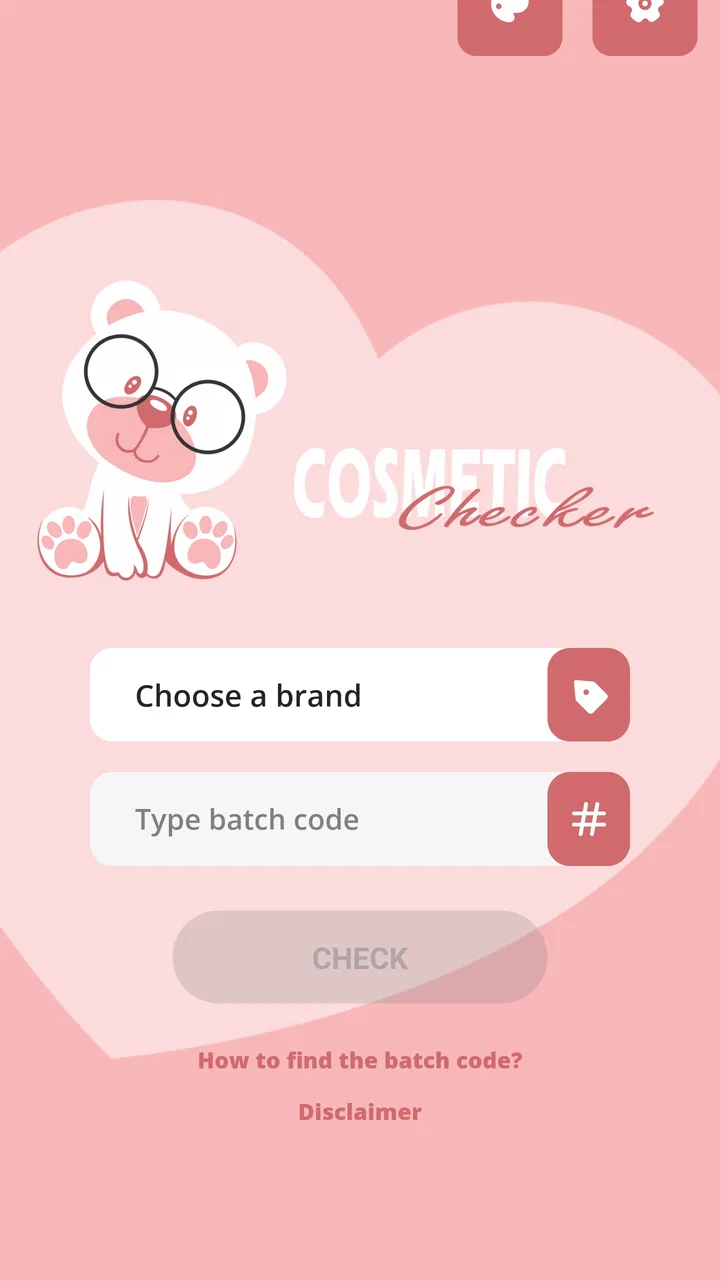
The practical workflow is straightforward. I take the cosmetic I want to examine, locate its batch code, and enter or check that code through the app. The code may be printed somewhere less obvious than the main label, so I usually inspect the base, crimp, box, or another small printed area before assuming it is missing. Good lighting helps, particularly with pale packaging and tiny lettering.
One habit makes the process much smoother: I keep the product beside me while checking rather than copying codes from memory. Short combinations of letters and numbers are easy to transpose, and a single wrong character can lead to a confusing result. When the packaging includes more than one code, I compare the locations and markings carefully instead of choosing the most visible string automatically.
I also treat the result as something to record mentally in context. If I am checking several products, I do not look only at the date and immediately close the app. I compare the result with when I opened the item, how often I use it, and where it has been stored. A foundation kept in a warm bathroom deserves more caution than the same age of product kept sealed in a cool drawer.
For a personal collection, a useful workflow is to check the items I use near my eyes or on sensitive areas first. Mascara, eyeliner, concealer, and skincare products can become priorities because they are applied frequently or close to delicate skin. I then move to occasional-use items such as perfume or a rarely worn lipstick. This makes the app more useful than randomly checking whatever product happens to be nearby.
Another practical tip is to check a product before buying it second-hand or accepting it as a gift. If the packaging is old-looking or the seller cannot explain when it was acquired, a batch-code check may reveal that the bargain is not as attractive as it seemed. It still cannot prove how the item was stored, but it can prevent me from treating an unknown product as new simply because it is unopened.
When the result does not settle the question
Batch-code systems are not perfectly universal. Cosmetic brands use their own coding conventions, and an unfamiliar or difficult-to-read code can reduce the usefulness of any checker. If the app does not provide a clear interpretation, I would not force a conclusion from a guess. I would compare the packaging with the manufacturer’s information or contact the brand directly when the product is expensive, medically relevant, or intended for very sensitive skin.
This is also why I prefer using the app before a purchase decision rather than after opening something questionable. If I am already worried about a product’s authenticity or condition, a date lookup alone cannot resolve every concern. Packaging consistency, seller reputation, seals, smell, texture, and the product’s response on my skin remain important.
The current version is 1.6.2, and the app supports devices running Android 7.0 or newer. That makes it accessible on many older Android phones, which suits a utility that does not need to be tied to the newest handset. I would still keep expectations modest: its value comes from the focused lookup, not from a large beauty-management system surrounding it.
The everyday situation where it earns its place
The strongest scenario for me is a seasonal beauty clear-out. Imagine opening a drawer before a holiday and finding several foundations, an old perfume, two lip products, and skincare samples collected over time. I may remember buying some of them but not the order. Rather than judging everything by appearance, I can check the batch codes, group the products by manufacture date, and then inspect the oldest or most frequently opened items first.
That workflow saves more time than searching each brand separately. It also reduces the temptation to keep products merely because they are expensive or nearly full. If a product is old and its smell or texture has changed, the decision becomes easy. If it is older but unopened and stored well, I can investigate further instead of throwing it away automatically. The app gives structure to a decision that otherwise becomes guesswork.
I can see the same benefit for someone who rotates makeup between a home bag, a travel bag, and an occasional-use kit. Products disappear from regular view, then reappear months later. A batch check provides a quick reminder that “I bought this recently” is not always the same as “I opened this recently.” That distinction encourages better organization without requiring a full inventory system.
It is also helpful for families sharing an interest in beauty products. A teenager may receive cosmetics from friends or relatives and have no idea when they were made. Because the app is free and aimed at a general audience under a Teen rating, it can support a simple conversation about checking labels and noticing changes in products rather than relying on appearance alone.
For perfume collectors, the benefit is slightly different. Fragrance can remain usable for a long time, but storage and formula changes still matter. A manufacture-date reference helps explain why two bottles of a similar scent may not have been produced at the same time. I would use that information to decide which bottle to enjoy first, while remembering that smell and storage are more informative than age alone.
Where the focused design helps and where it frustrates
The focused design is refreshing because it avoids burying the main task under social feeds, beauty articles, shopping prompts, or collection features. When I want to inspect a code, I want to get to the lookup and return to the product. Cosmetic Checker’s identity is easy to understand, and that makes it more approachable than a broad beauty platform for someone with one immediate question.
Its weakness is the same narrowness. If I want ingredient analysis, shade matching, routine planning, reminders for when I opened a product, or a personal inventory, I would need another app or a simple note on my phone. A barcode scanner or brand database may be more convenient for shoppers who want product discovery rather than manufacture-date checking. A manufacturer’s customer service channel may also be better when the code is unclear or the product’s authenticity is in doubt.
The app’s average rating is 3.2 from around 288 ratings, with 25 written reviews, while its reach has passed 50 thousand installs. I read those figures as a sign of a useful but specialized tool rather than a universally essential beauty app. People who encounter supported, readable batch codes may find it handy; people expecting every cosmetic to produce a definitive answer may come away disappointed.
There is also a trade-off between speed and confidence. A quick lookup is convenient, but convenience can encourage overconfidence. I would never use the app to reassure myself about a product that has been exposed to heat, moisture, or repeated contamination. Nor would I use a manufacture date to decide whether a product is suitable for my skin. Those questions require different evidence.
Another limitation is that the app’s usefulness depends on the code being present and legible. Packaging can wear down, boxes can be discarded, and printed characters can be extremely small. I recommend photographing the code before opening or recycling packaging if I expect to check the product later. That small habit preserves the information the app needs and prevents a frustrating search through old bags or drawers.
How it compares with ordinary alternatives
The usual alternative is a web search for the brand’s batch-code format. That can work, but it often means sorting through inconsistent explanations and deciding which result applies to the exact product. Cosmetic Checker is more convenient when I want a dedicated place to perform the check without building my own list of brand-specific methods.
Another alternative is asking the retailer or manufacturer. That route is preferable for an expensive item, a disputed purchase, or a code that does not make sense. It may take more effort, but it can address questions that a general checker cannot, including authenticity and storage history. I see the app as the quick first pass, not a replacement for the brand when the stakes are high.
General beauty apps may offer much more content, but that can be unnecessary if manufacture date is the only thing I need. Conversely, someone who wants a complete collection manager may prefer a broader tool, even if its batch-code feature is less central. Cosmetic Checker makes the most sense when I value a direct utility over a large feature set.
Who will gain the most from using it
I would recommend Cosmetic Checker to people who own many cosmetics, rotate products seasonally, buy from different retailers, or frequently forget when an item was purchased. It is especially practical for anyone trying to reduce waste responsibly. Instead of discarding every older product or keeping everything indefinitely, I can use the date as one part of a more careful review.
It is also a good fit for occasional beauty users. Someone who wears makeup only for events may have products that sit untouched for long stretches. The app helps bring the age question into the decision before those items return to regular use. The same applies to people who travel with small kits and lose track of when a product moved from the main collection into a suitcase.
I would be more cautious about recommending it to someone who wants medical-grade certainty, ingredient interpretation, or a complete record of opened products. It is not the right choice for diagnosing irritation, verifying a counterfeit, or deciding whether a product is suitable during a specific health condition. In those situations, a pharmacist, dermatologist, manufacturer, or retailer may provide better guidance.
For a new user, my advice is to start with three products: one recently bought, one whose age is uncertain, and one that has been open for a long time. Compare the results with the packaging and the product’s condition. That small test quickly shows whether the app fits your routine and teaches the most important lesson: the date is useful context, but it should not replace observation and common sense.
Bin Bi Bong has kept the concept simple, and I think that is why the app remains easy to explain. It is free, available for Android users on version 7.0 or later, and its beauty category is clearly defined by one task. The audience is not buying into a complicated ecosystem; they are trying to decode information that cosmetics often hide in plain sight.
My recommendation after using it
Cosmetic Checker earns a place on my phone when I am organizing cosmetics or questioning an item’s age. I like that it turns a small, overlooked batch code into something actionable. The best results come when I use it before a clear-out, before opening an old product, or before treating an unfamiliar cosmetic as a safe bargain.
I would not install it expecting a complete beauty assistant. Its value is narrower and more practical: it helps establish when a cosmetic was manufactured, then leaves me to combine that information with opening date, storage, appearance, smell, and brand guidance. That limitation should be understood, but it does not cancel the benefit.
With an average rating of 3.2 and more than 50 thousand installs, it has found a modest audience for a very specific problem. My final view is similarly measured. If batch-code checking is something I need even occasionally, the free download is worth trying. If I want shopping recommendations, ingredient expertise, or a full product diary, I would choose a different kind of app and keep this one only as a supporting tool.
FAQs for Cosmetic Checker
01What is Cosmetic Checker and how does it work?
Cosmetic Checker is an app designed to help users verify the safety and authenticity of cosmetic products. By scanning a product's barcode, users can access detailed information about ingredients, expiration dates, and potential allergens. The app also provides user reviews and ratings to assist in making informed purchasing decisions.
02Is Cosmetic Checker free to use, or does it require a subscription?
Cosmetic Checker offers a free version with basic features, allowing users to scan barcodes and access essential product information. For advanced features, such as personalized alerts and detailed ingredient analyses, a premium subscription is available. Pricing details can be found within the app store listing or the app's settings menu.
03Can Cosmetic Checker identify counterfeit products?
Cosmetic Checker can help users identify potential counterfeit products by comparing scanned data with a comprehensive database of verified products. While it cannot guarantee the authenticity of every item, it provides valuable insights and warnings to alert users if a product's information does not match known data.
04Is Cosmetic Checker available on both Android and iOS platforms?
Yes, Cosmetic Checker is available for download on both Android and iOS platforms. Users can find the app on the Google Play Store for Android devices and the Apple App Store for iOS devices. Ensure your device meets the minimum system requirements for optimal performance.
05Does Cosmetic Checker provide information on all cosmetic brands worldwide?
Cosmetic Checker covers a wide range of popular brands internationally, but it may not include every brand or product available worldwide. The app continuously updates its database to include more products and brands. Users can also suggest new products for inclusion through the app's feedback feature.
Pros
- User-friendly interface for quick checks.
- Database is frequently updated.
- Supports barcode scanning for convenience.
- Offers ingredient breakdown and analysis.
- Includes user reviews for better insights.
Cons
- Limited language options available.
- Requires internet for full functionality.
- Occasional ads can be intrusive.
- Some features are behind a paywall.
- Database may miss niche products.

Cosmetic Checker
Gallery